3
The start of the file shows printable x86 code, then an EICAR-like string, then a PDF header; the end shows a ZIP (PK, flag.txt) and a VHD footer (conectix, FLAREONPOLYGLOT!)
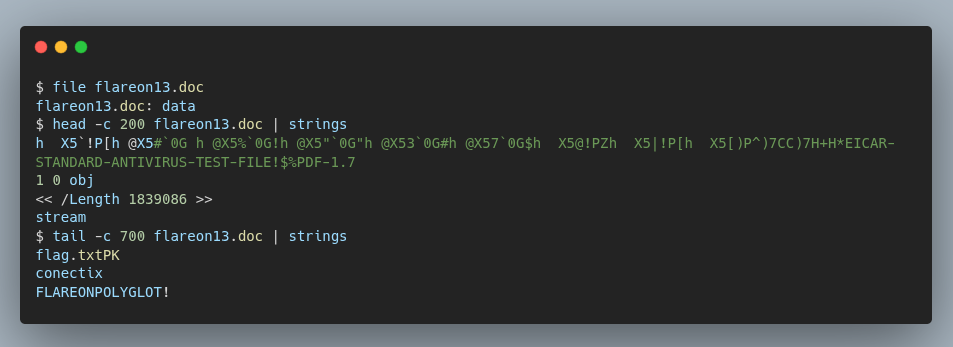
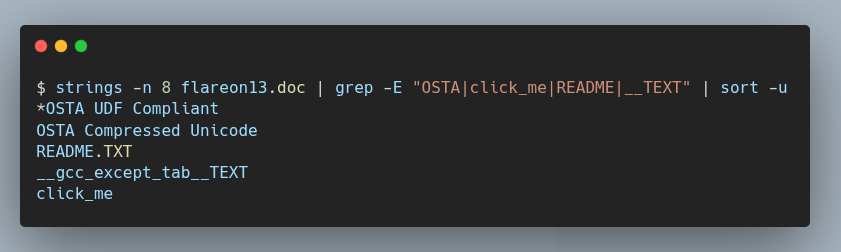
The middle holds UDF disc strings (OSTA, click_me, README.TXT) and Mach-O section names. The polyglot nests: EICAR/DOS COM > PDF > UDF disc (raw 2352-byte CD sectors) containing a fat Mach-O > ZIP > VHD footer
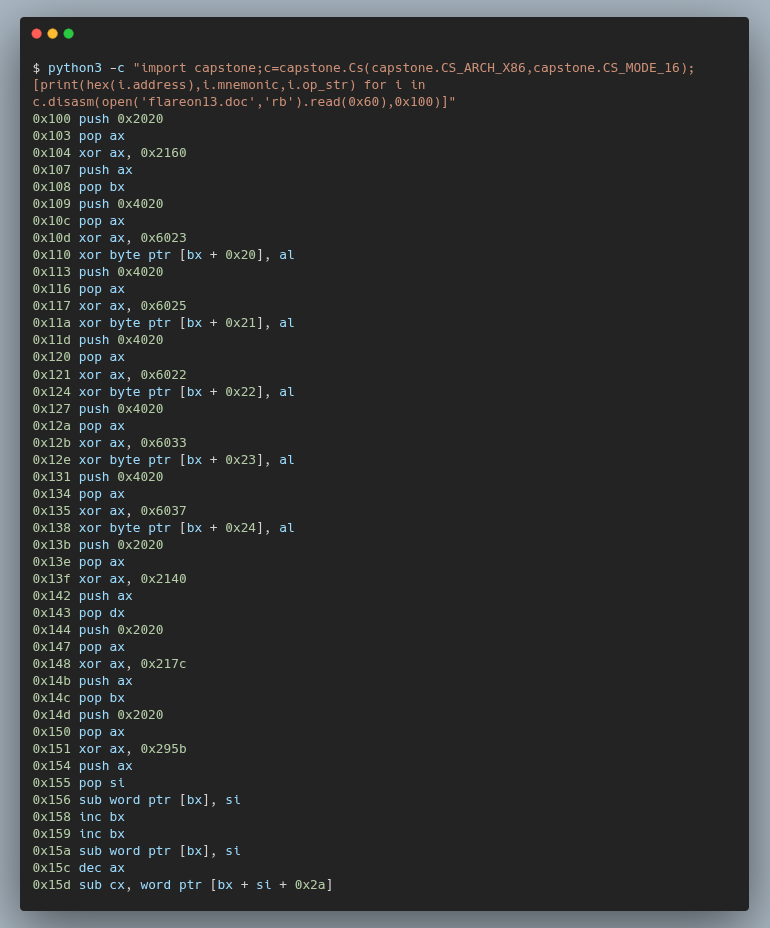
The first 0x84 bytes look like EICAR but are self-modifying 16-bit code: it XORs 5 bytes of its own string (EICAR→FLARE), patches in int 21h, and prints with DOS function 09h
Applying the same XOR patch gives the message it would print

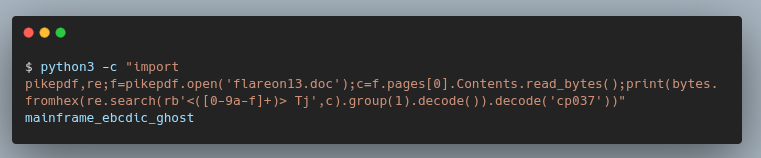
The PDF is RC4-40 encrypted with an empty user password, so any library opens it. The page draws a FLARE ON logo plus text in render mode 3 Tr (invisible) as a hex string

The bytes aren't ASCII — 0x94 0x81 0x89… is EBCDIC. Decode as cp037
The page also references an 808×48 1-bit JBIG2 image, drawn off-page and squashed so you never see it. Render it by itself:

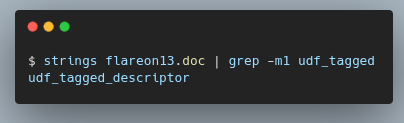
The PDF's first stream is actually a UDF (DVD) disc image. Its metadata carries a telling string
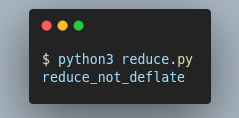
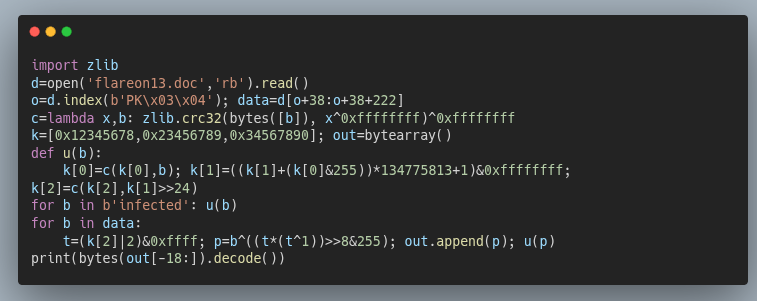
The flag.txt in the trailing ZIP is "reduced" (PKWARE Reduce), not deflated — decompressing it gives another string
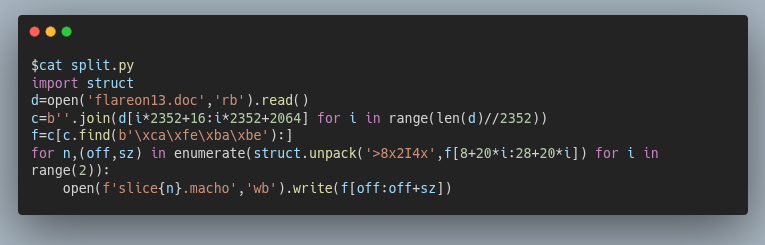
The UDF disc holds README.TXT (decoy) and click_me, a fat Mach-O with two arm64 slices. Raw CD sectors are 2352 bytes (16-byte header, 2048 data, 288 ECC); strip each to its 2048 data bytes, then split the fat binary
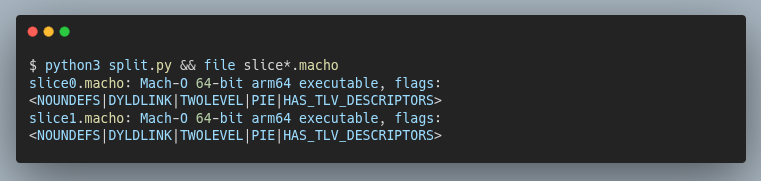
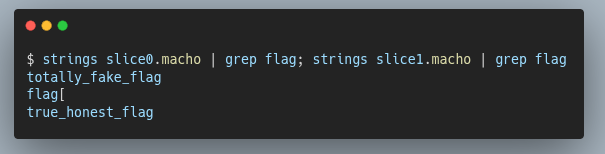
slice0 = totally_fake_flag (subtype ALL, the one macOS runs); slice1 = true_honest_flag (subtype 3 is invalid, never executed — the real checker, with leetspeak'd strings to frustrate strings)

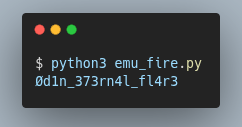
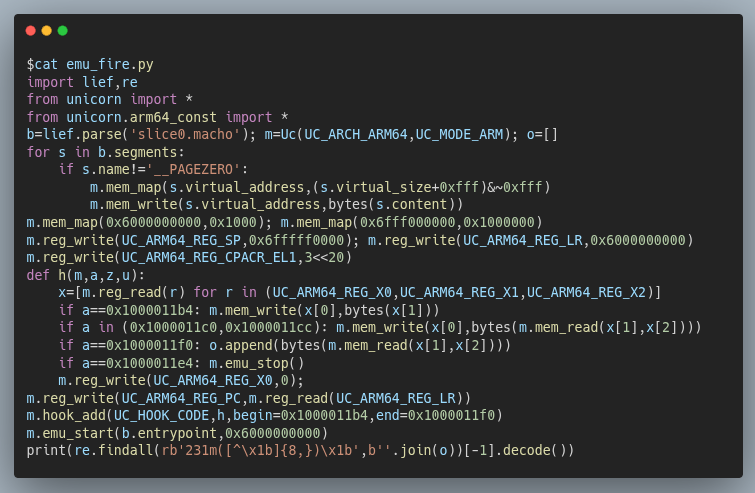
Slice 0 draws an ANSI fire animation, calls ptrace(PT_DENY_ATTACH), and hides a string under the fire computed from a modified SHA-1. No Mac needed — emulate it with Unicorn, stub out libc, grab the text
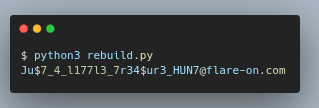
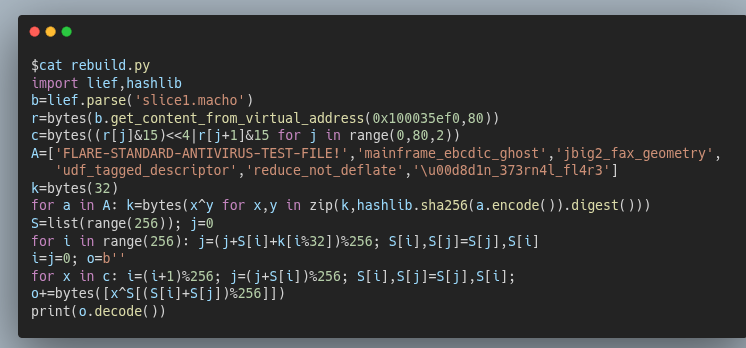
Slice 1 (Crystal) prompts flag[1]>…flag[6]>, MD5s each input against a 6-entry table (stored as 32-byte strings where only the low nibble of each byte counts), XORs the SHA-256 of each into a 32-byte key, then RC4-decrypts a 40-byte blob. First recover the six answers from the MD5 table
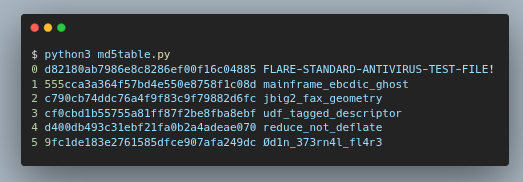
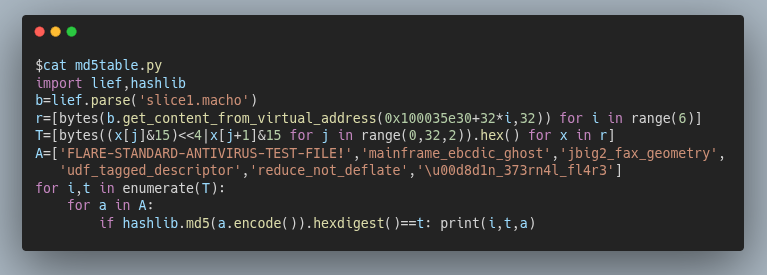
Then rebuild the key from those answers and RC4-decrypt the blob