4
Trojanized cpuminer-multi 1.3.7. Default algo sha256d (index 39) is dispatched to a custom scanhash at 0x140134f70. On a match it derives an RC4 key from doublehash(volume_serial, 0x0b501e7e)[:16] and decrypts the 51 bytes at 0x1401bd3b0 → the flag. So the flag depends only on the serial.
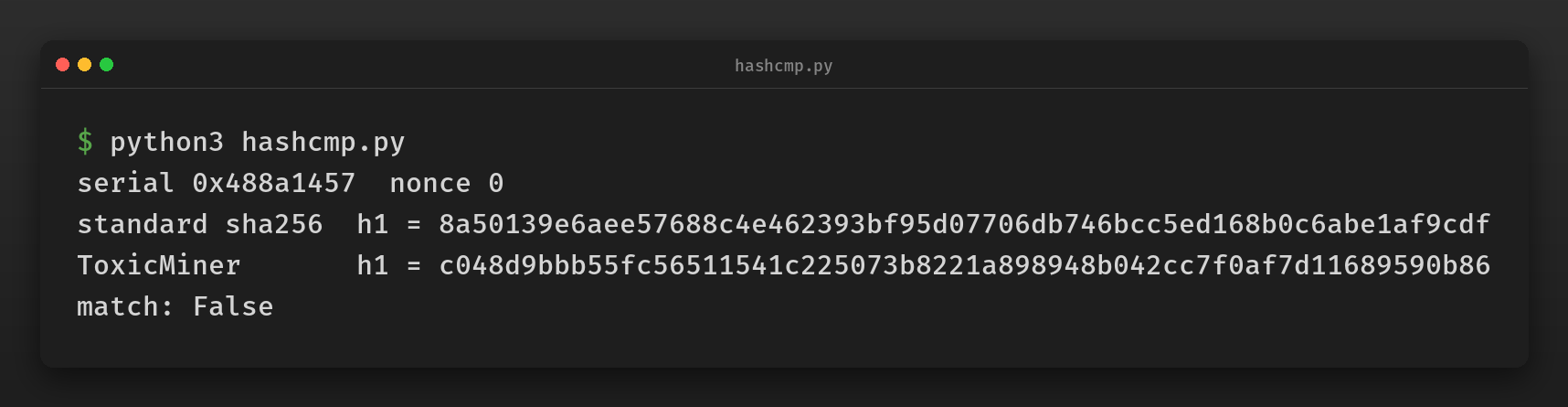
A textbook SHA-256 of (serial, nonce) doesn't match what the binary computes (dumped in winedbg at 0x140135156) → the compression function at 0x140135240 is modified.
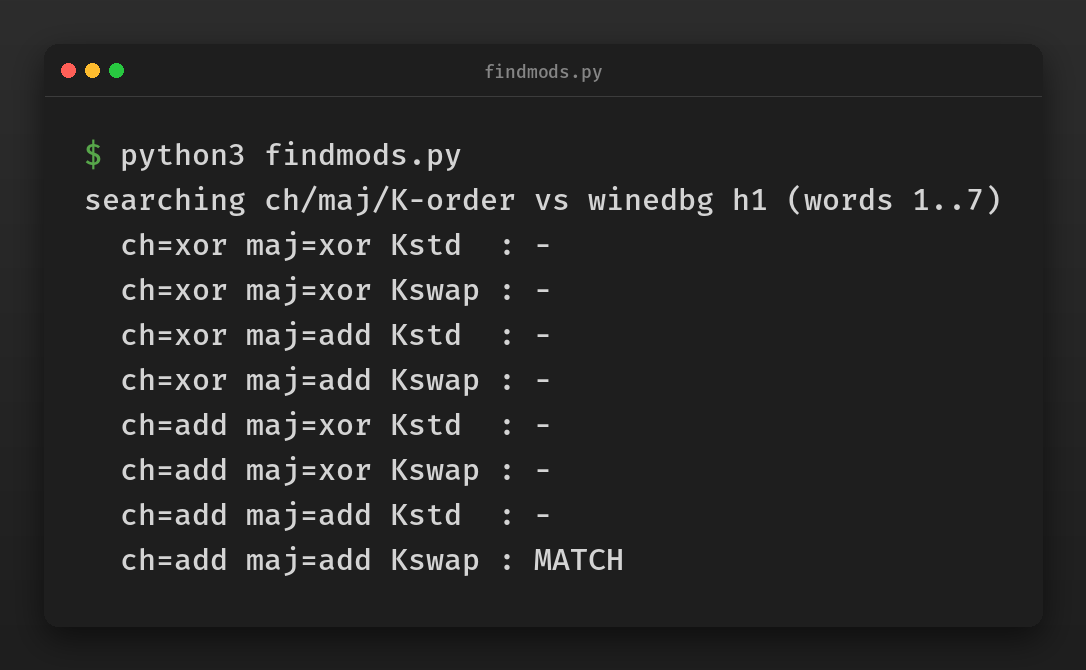
Searching candidate round tweaks against that dumped hash pins them: ch uses f + g (not f ^ g), maj uses (b&c) + (a&c) (not XOR of all three), and K[0]/K[1] are swapped.
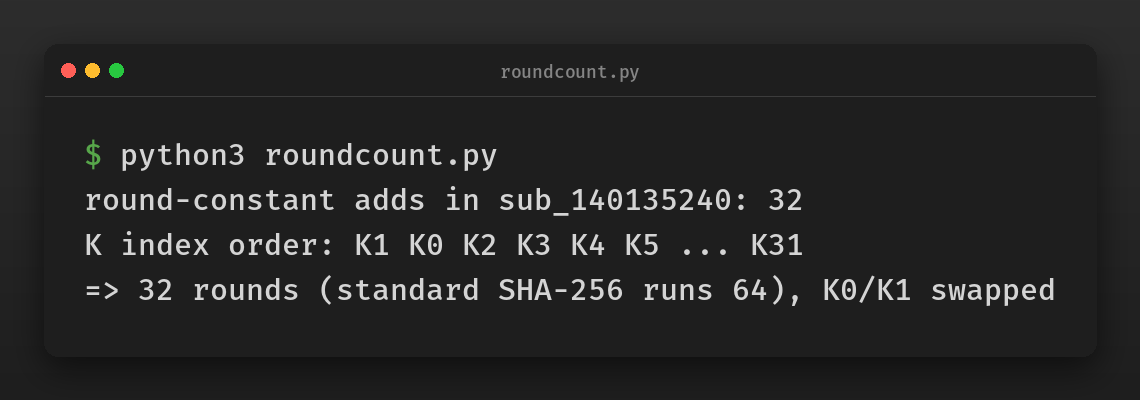
Counting the round-constant adds in the function confirms it: 32 (standard SHA-256 runs 64), starting K1 K0 — i.e. 32 rounds with the K0/K1 swap.
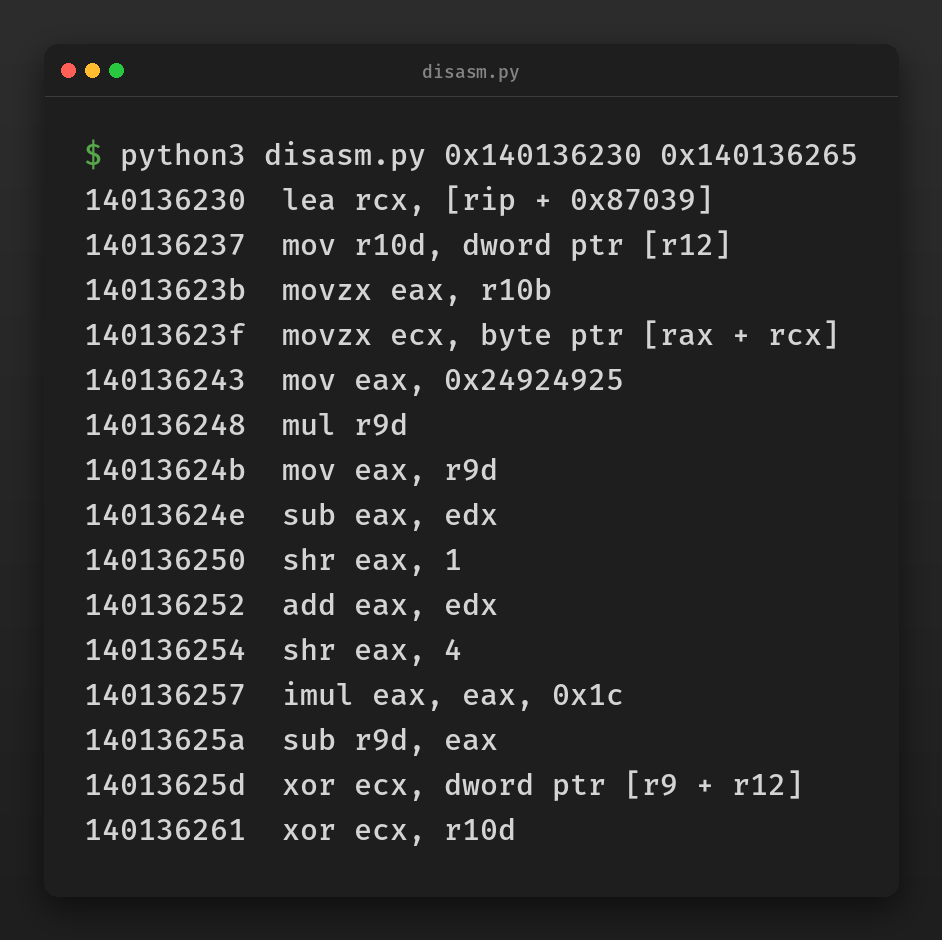
The tail is a per-block finalizer that scrambles word 0: table lookup at 0x1401bd270 XORed with a state dword picked by o[1] % 28, XORed with o[0].
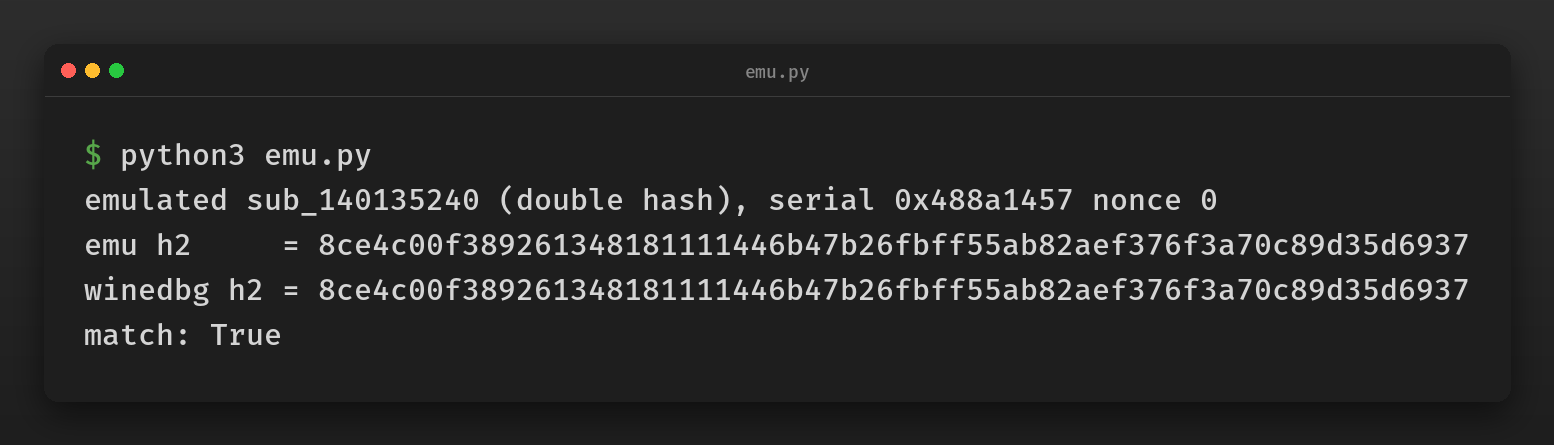
Rather than hand-trace the interleaved SSE, I mapped the PE into Unicorn and called the function directly — it reproduces the exact winedbg hash, giving an oracle.
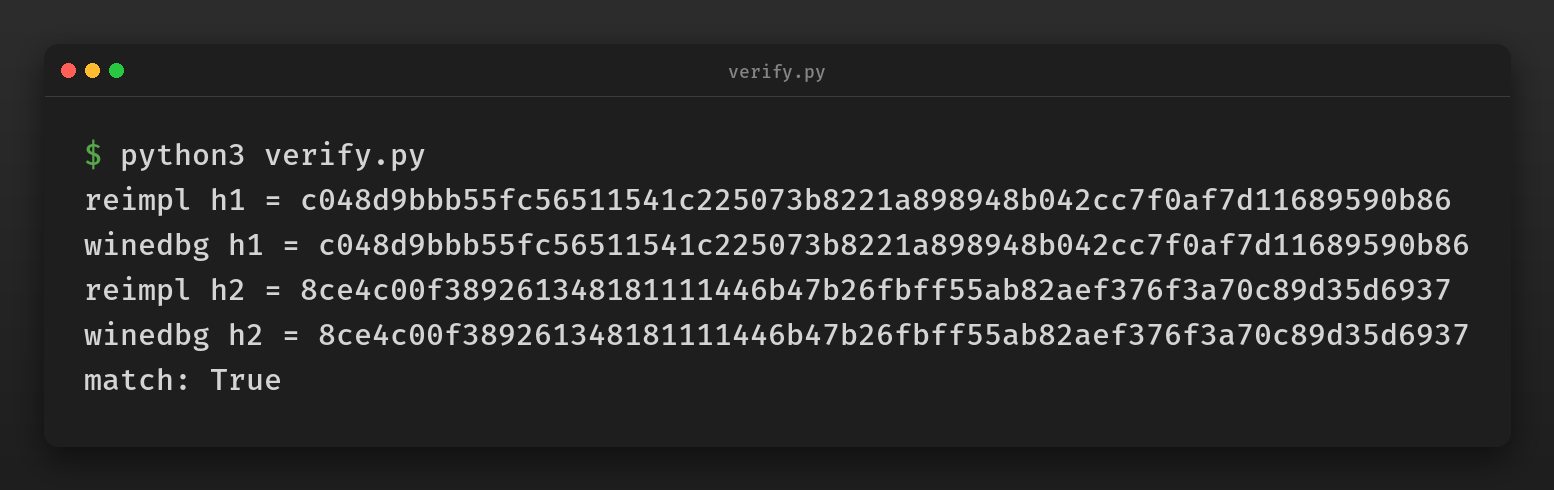
A from-scratch Python reimplementation (32 rounds + modified ch/maj + K-swap + finalizer) matches the binary for both blocks h1 and h2.
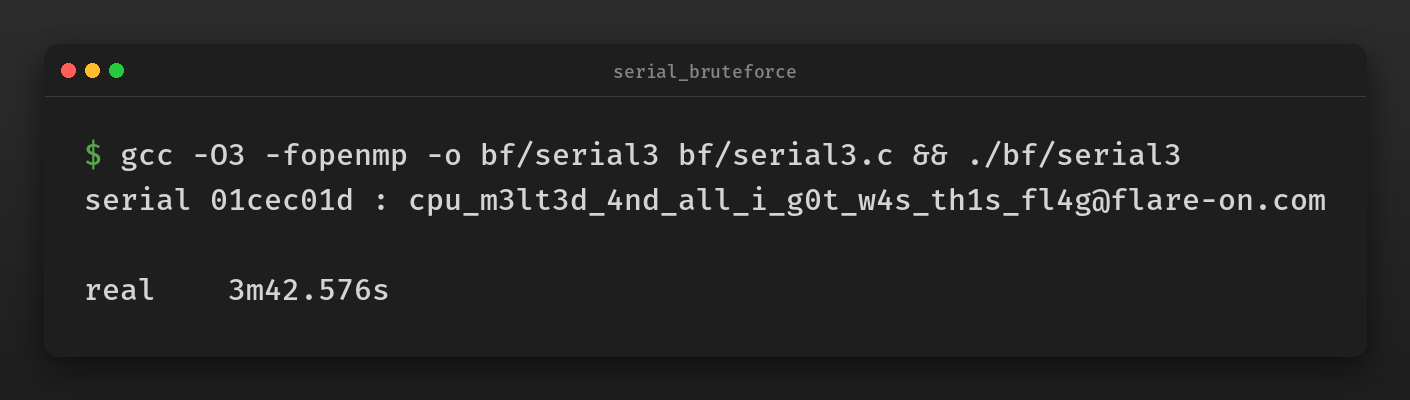
Port it to C and brute-force all 2³² volume serials (fixed nonce 0x0b501e7e) → RC4 → keep the printable decrypt ending @flare-on.com. Winning serial 0x01cec01d.