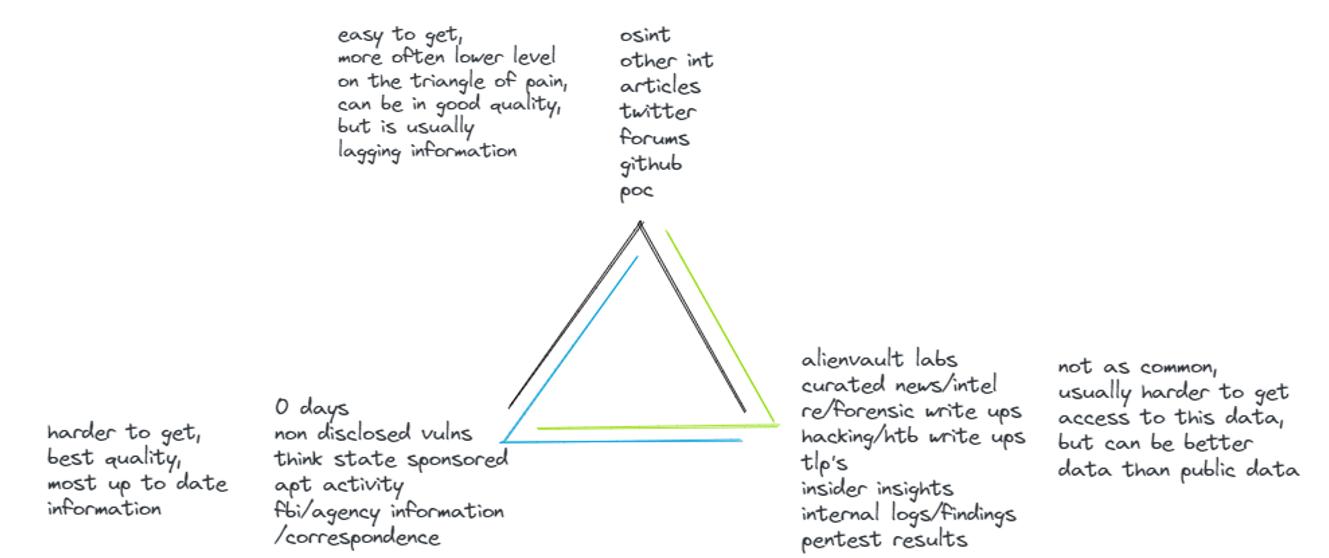
Tiers of Intel
Prioritization in Threat Hunting
Items are prioritized in a tiered system. Items within each tier are not listed in a specific order. The focus is on addressing higher-tier items first; as resources become available and higher-tier items are resolved, attention can shift to lower-tier items.
Tier 3 (Highest Priority)
- Critical CVEs
- Urgent Common Vulnerabilities and Exposures requiring immediate action.
- Publicly available POCs increasing risk.
- TLB:AMBER or Specific Advisories
- Trusted advisories labeled as TLP:AMBER, indicating sensitive information for limited distribution.
- Zero-Day/Non-Disclosed Vulnerabilities
- Newly discovered vulnerabilities not yet publicly disclosed or patched.
- Impending Doom
- Indicators of imminent and severe threats to critical systems.
- High-Fidelity IOCs/IOAs/Threats
- Highly reliable Indicators of Compromise (IOCs), Indicators of Attack (IOAs), or specific threats that necessitate swift response.
Tier 2 (Medium Priority)
- Higher Business Impact Items
- Advisories from organizations like CISA (Cybersecurity and Infrastructure Security Agency).
- Impacts on Industrial Control Systems (ICS).
- Solid or Newer TTPs
- Recently identified or well-established Tactics, Techniques, and Procedures.
- Emerging Threats
- New threats that are starting to surface and may affect operations.
- Higher-Tier Threat Intelligence
- Curated Intelligence
- Carefully selected and analyzed intel reports.
- Penetration Test Reviews
- Assessments of vulnerabilities identified during penetration testing.
- Curated Intelligence
- Tech Stacks Across Customers
- Common technology platforms used by multiple clients that could be targeted.
- Industry Vertical Threats
- Threats specific to certain industries or sectors.
- Customer Matches Files and Dumps
- Discovery of customer data in leaked files or data dumps.
- Reviewing Increases in Brute Force or New Activity
- Monitoring spikes in attack attempts or unusual behaviors.
Tier 1 (Lowest Priority)
- Pulse/IOC Reviews
- Regular examination of threat feeds and indicators.
- Low-Tier/Blog/Open-Source Intelligence (OSINT) Hunts
- Investigations based on blogs, forums, and publicly available information.
- Reviewing Older Malware
- Analysis of outdated malware that might still pose risks.
Note:
- Increased Data Fidelity with CSINT: As organizations move from Open-Source Intelligence (OSINT) to Closed-Source Intelligence (CSINT), the data obtained has higher fidelity and accuracy.
- Challenges for Threat Actors: This shift from OSINT to CSINT largely makes it more difficult for threat actors to access or adapt to known security measures, enhancing the organization's defense against potential threats.
- Tier Levels:
- Tier 3: Represents the most critical threats that require immediate attention and resources.
- Tier 2: Includes significant threats that are important but less urgent than Tier 3.
- Tier 1: Consists of routine or lower-priority items that can be addressed as resources permit.
Understanding the Logic:
- Resource Allocation:
- Higher-tier items consume more resources due to their urgency and impact.
- Once higher-tier items are managed, resources can be reallocated to address lower-tier items.